Colorado Water Plan Grant Provides $1.75 million to Expand CSU-TAPS Farming Competitions
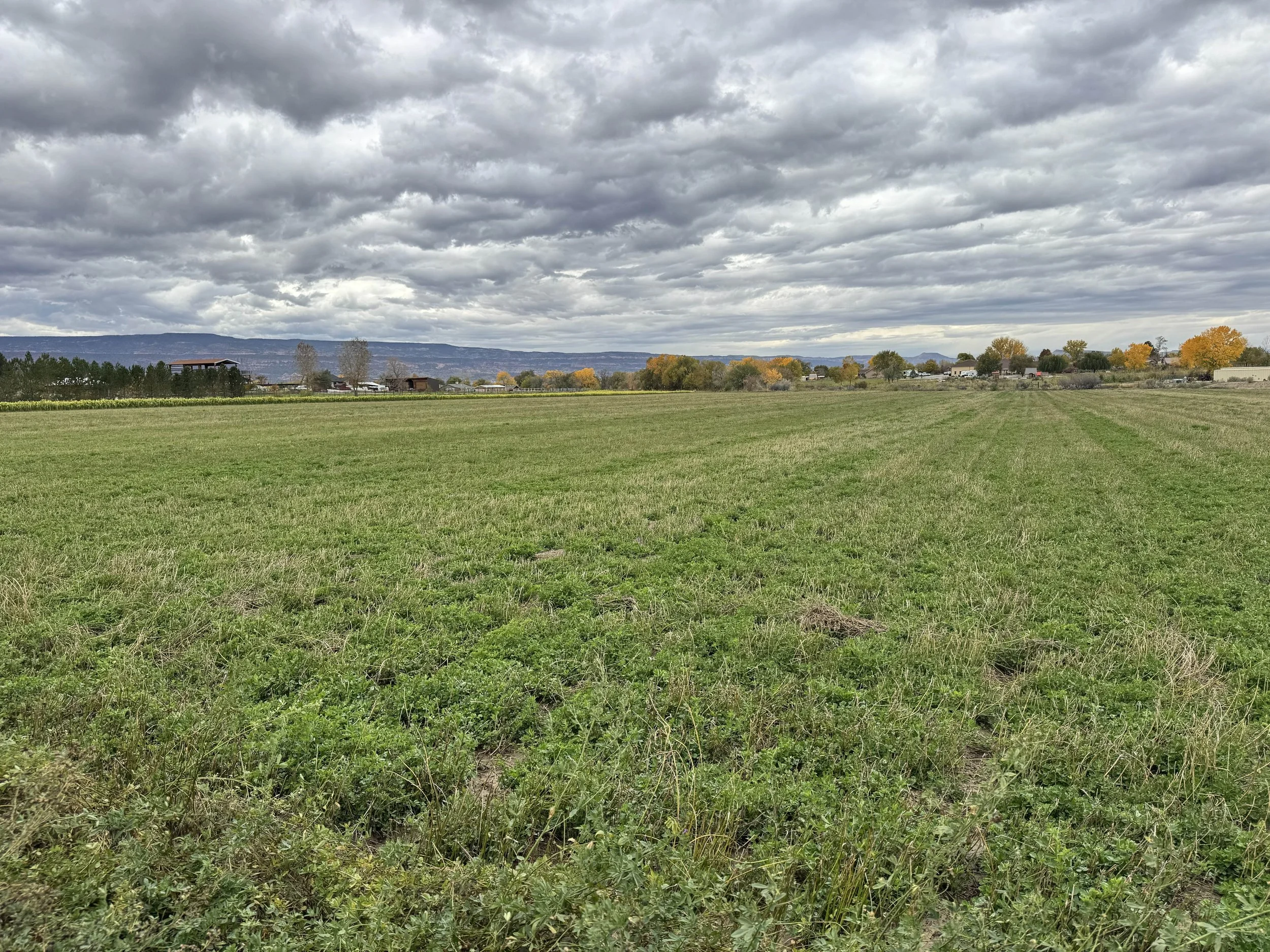
The new CSU-TAPS Perennial Forage Farm Management Competition (furrow irrigated) will be hosted in a field at CSU’s Western Colorado Research Center in Fruita. Photo by Michael Lobato
CSU-TAPS begins a new perennial forage competition in Fruita, in addition to the sprinkler corn competition in Fort Collins, strengthening agricultural resilience across Colorado.
The Irrigation Innovation Consortium (IIC) in Colorado State University’s Department of Soil and Crop Sciences, has been awarded a $1,748,534 Colorado Water Plan Grant. This funding supports the CSU Testing Ag Performance Solutions (CSU-TAPS) farm management competition hosted in Larimer County while expanding it to add another host location in Mesa County, in an effort to encourage precision water management and strengthen agricultural drought resilience across the state.
The project, “Scaling CSU-TAPS for Agricultural Drought-Resilience and Statewide Impact,” will establish a new furrow-irrigated perennial forage management TAPS competition at CSU’s Western Colorado Research Center (WCRC) in Fruita, and it will extend the existing sprinkler-irrigated corn competition at CSU's Agricultural Research, Development and Education Center (ARDEC) in Fort Collins, through 2030. Together, these efforts create a comprehensive demonstration, applied research, and producer co-learning platform that will serve Colorado agricultural communities statewide.
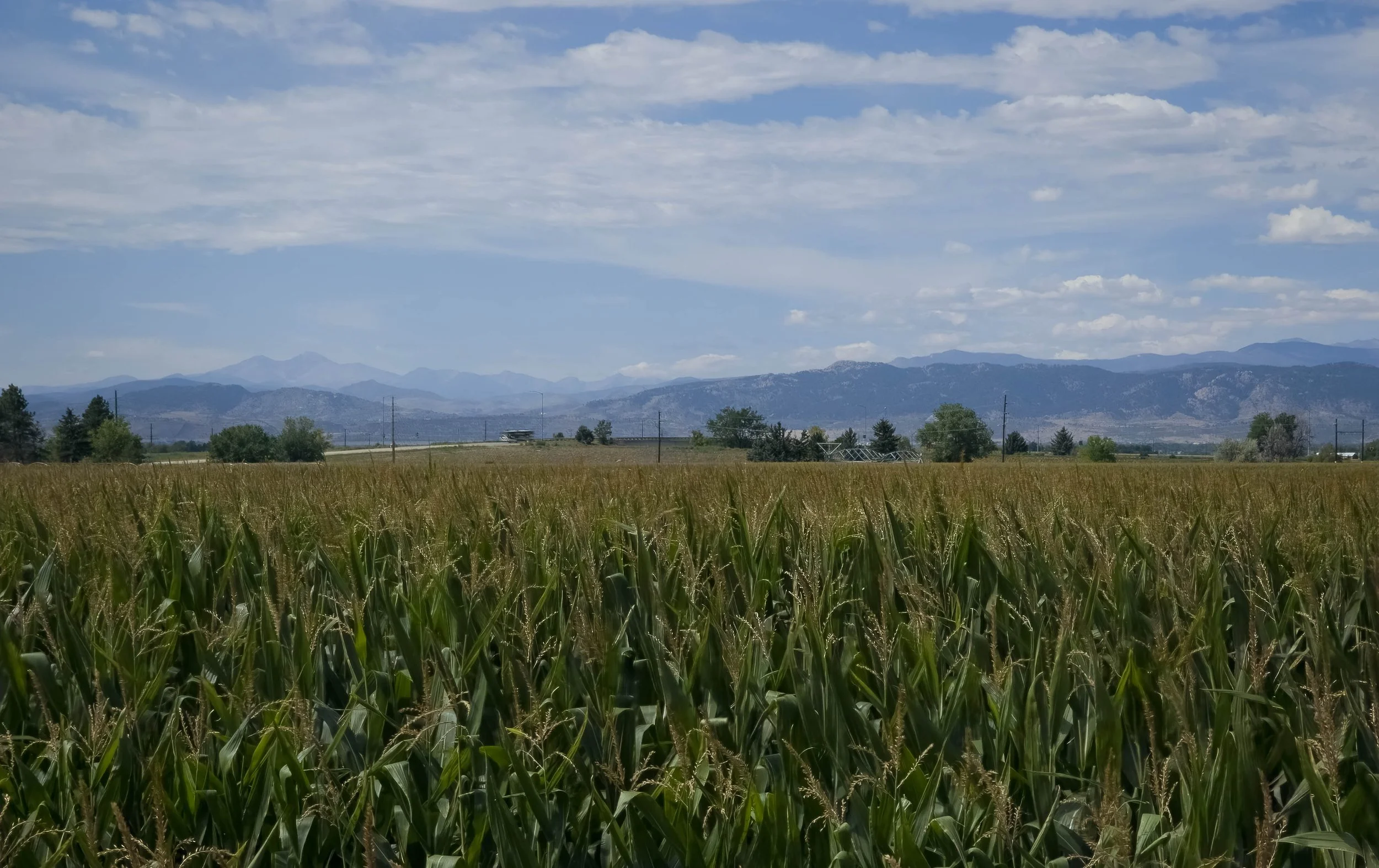
The CSU-TAPS Sprinkler Corn Farm Management Competition has been held annually at CSU’s Agricultural, Research, Development, and Educational Center in Fort Collins, Colorado, since 2023. Photo by Omer Izrael
"This funding allows us to expand a proven model that puts farmers and ranchers at the center of innovation in building Colorado ag resilience,” said Tim Martin, IIC executive director. “CSU-TAPS gives producers a unique opportunity to test management strategies, evaluate economic and water-use outcomes, and learn from one another using powerful precision tools for making data-driven decisions, through the TAPS program.”
The grant advances goals of the Colorado Water Plan by expanding agricultural conservation education, encouraging peer-to-peer learning, and demonstrating economically viable alternatives that help sustain productive and profitable agricultural lands and rural communities.
Learn more about CSU-TAPS here.
Learn more about the TAPS Network here.
In the innovative TAPS format, participants remotely manage competition plots side-by-side in a CSU research field, throughout the growing season. Competitors make real-world, data-driven farming decisions (hybrid selection, seeding rate, irrigation, fertilizer use, insurance, marketing, etc.) through an online portal, and CSU staff implement those decisions in the field.
TAPS awards prizes in profitability, resource-use efficiency, and crop yield. The program’s risk-free environment also helps producers identify practical approaches for improving productivity, efficiency, and profitability while adapting to reduced water availability without threatening their own operations.
Launched by the University of Nebraska, Lincoln, in 2017, the format has expanded to 10 states, adapted to a variety of crops and irrigation systems. CSU-TAPS began in 2023 and has held an in-demand sprinkler corn competition every year since.
Upper Colorado Basin Impact
Establishing the new CSU-TAPS perennial forage competition directly addresses growing agricultural challenges facing the entire Upper Colorado River Basin, such as increasing drought frequency, declining snowpack, rising input costs, and market volatility.
“This is the first TAPS program dedicated to perennial forages,” said Perry Cabot, CSU Colorado Water Center Extension professor based at WCRC. “Bringing CSU-TAPS to the Upper Colorado Basin allows us to strengthen our engagement and research foothold in one of the most important crops for our state, and the Basin overall.
“Through the competition, we will be working with teams of farmers to understand drought tolerant seed mix options; ways to integrate potential water leasing without compromising long-term soil health; better weed management; and different irrigation regimes,” he added. “Our plan is to even include livestock grazing on a small scale, to mimic the practices of producers throughout the region.”
Because CSU-TAPS is offered virtually, participation is expected from producers, agricultural professionals, students, and stakeholders across Colorado, with engagement anticipated in more than two dozen counties statewide. This expansion aims to reach more than 5,000 Coloradans through educational and outreach activities.
Additional CSU-TAPS partners include the U.S. Department of Agriculture Natural Resources Conservation Service (USDA-NRCS), U.S. Department of Agriculture Agricultural Research Service (USDA-ARS), the Colorado Water Center, CSU Ag Water Quality Program, CSU One Water Solutions Institute, General Mills, Colorado Corn Promotion Council, conservation districts, seed companies, and agricultural technology providers.
The total investment supporting CSU-TAPS is $2,332,664, including this Colorado Water Conservation Board Colorado Water Plan grant and matching contributions of more than $584,000 from project partners.
“The TAPS format is one of the best ways to get producers and researchers working together for a common cause,” Cabot said. “This effort is a significant part of an Upper Colorado Basin response to ongoing aridification. We are actively seeking producer competitors to take part in this landmark effort to support Upper Basin agriculture.”
Recruitment for the 2027 CSU-TAPS farm management competitions is underway this fall. The sprinkler corn competition in Fort Collins will launch in spring 2027; the perennial forage competition will launch in early summer 2027.
CSU-TAPS Sprinkler Corn Competition Interest Form
CSU-TAPS Perennial Forage Competition Interest Form
About the Colorado Water Conservation Board: The CWCB mission “is to conserve, develop, protect and manage Colorado's water for present and future generations.” It represents the state’s major water basins and state agencies in pursuit of this and also represents the state’s water interests on a national level. Established in 1937, CWCB supports a wide range of programs from flood mitigation to drought planning and supports the Colorado Water Plan. To learn more, go to https://cwcb.colorado.gov/about-us