
CSU-TAPS 2025 Winner Strategies
Farm management competitors use individual experience and real-time field data to make winning decisions throughout the CSU-TAPS growing season.
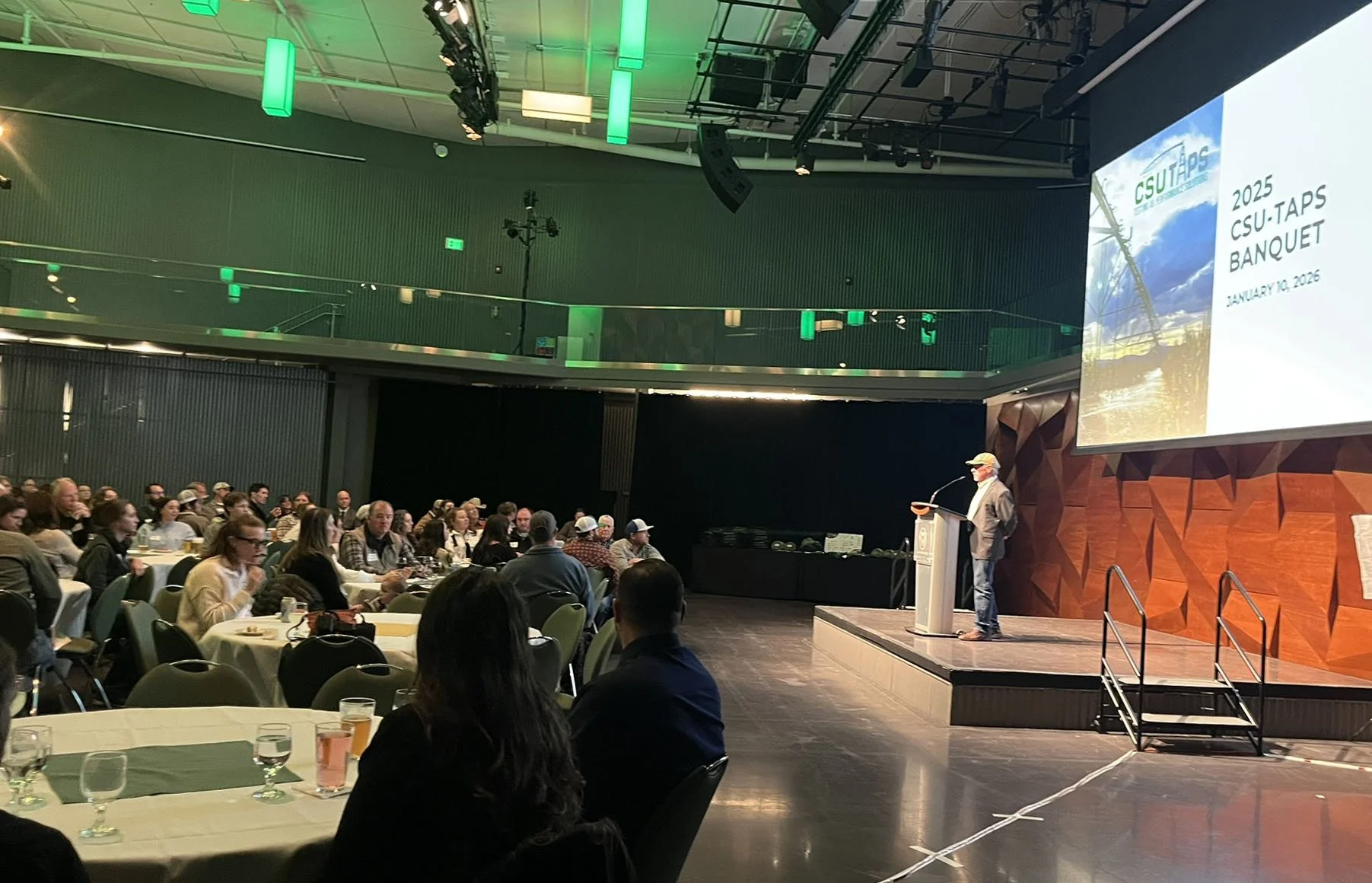
The CSU-TAPS year end banquet on January 10, 2026, revealed the much-anticipated 2025 farm management competition winners. It’s also a time to celebrate participants and partners who support the program.
The CSU-TAPS year end banquet on January 10, 2026, revealed the much-anticipated 2025 farm management competition winners. A slew of variables impacted the winning outcomes, with 25 teams competing, making six management decisions – seed hybrid, seeding rate, irrigation, nitrogen, crop insurance and grain marketing.
The competition featured two tracks, full irrigation and limited irrigation, awarding top prizes in each for most input use efficient, most profitable, and highest yield.
Here are the 2025 winners, along with some observations and insights on the strategies behind their success from Omer Izrael, CSU-TAPS program manager, and Wub Yilma, CSU-TAPS precision irrigation manager.
Congrats to all the CSU-TAPS winning teams!
For complete competition results, download the CSU-TAPS 2025 Farm Management Competition Report, providing a competition overview and complete competition results.

2025 CSU-TAPS Farm 2: Chad Musick, Travis Steiben, and Ryley Stringer
Full Irrigation Most Input Use Efficient
Farm 2 – Ryley Stringer, Chad Musick, Travis Steiben
Winning strategy:
Yilma: “This team seems to be aware of the high residual soil nitrogen (N): They applied only the pre-plant N of 30 pounds/acre (lbs/ac) and no fertigation. Compared to other farms that produced comparable yield, they applied relatively lesser irrigation targeting the most water sensitive corn growth stages. These two decisions may have made them the most input-use efficient farm for 2025 CSU-TAPS competition”
Izrael: “They almost never applied the maximum amount of water possible in an irrigation event. They irrigated most at the beginning of the season and were more conservative later on. Looking at their soil moisture probe, they maintained soil moisture at the optimum range without going above or below it.”

Amber Graves (center) represented Farm 21, with awards presented by Wub Yilma (left) and Omer Izrael (right).
Full Irrigation Most Profitable & Highest Yield
Farm 21 – Amber Graves, Rob Graves, Joshua Sunberg
Winning strategy:
Yilma: “This farm applied a substantial amount of N: 30 lbs/ac pre-plant, 50 lbs/ac side-dress, and additional fertigation at V8, V12, and R1 corn growth stages. From the irrigation point of view, they didn’t apply the highest water overall; instead, they applied irrigation at the most water sensitive periods and didn’t miss any irrigation in these corn growth stages. It seems they consistently irrigated to meet the peak crop water demand and critical growth stages.
“In terms of N, they tried to balance the soil N with their applied N [for each of their three competition plots]. They maintained that balance to have an average high yield between the three plots—their application was timed perfectly and at the right amount.
They also had the highest seeding rate; that had an impact on the yield.
Izrael: “The main difference between them and the next [highest yielding] team was one missed irrigation by the second finishing team.
“In their marketing, they initiated a significant forward contract very early in the season, early May, and were able to secure a price of almost $5 per bushel for almost all of their yield. That gave them the lead in profitability.
“In terms of cost, they saved some money on water but did use a lot of N and had a high seeding rate, which are both more costly. They might have made an even higher profit if they had used fewer inputs.”

2025 CSU-TAPS Farm 11: Tom Gray and Larry Lempka
Ryan Taylor Award for Limited Irrigation Most Input Use Efficient
Farm 11 – Larry Lempka, Tom Gray, Crossroads Coop
Winning strategy:
Yilma: “Farm 11 applied 9.65 in of water, the fifth highest amount of water in the limited irrigation track. At the same time, they had the lowest N applied and I believe the reduced N inputs improved the overall input use efficiency.”
Izrael: “The difference between the top two most efficient farms was pretty small, and the amount of N applied was the most significant parameter between them.”
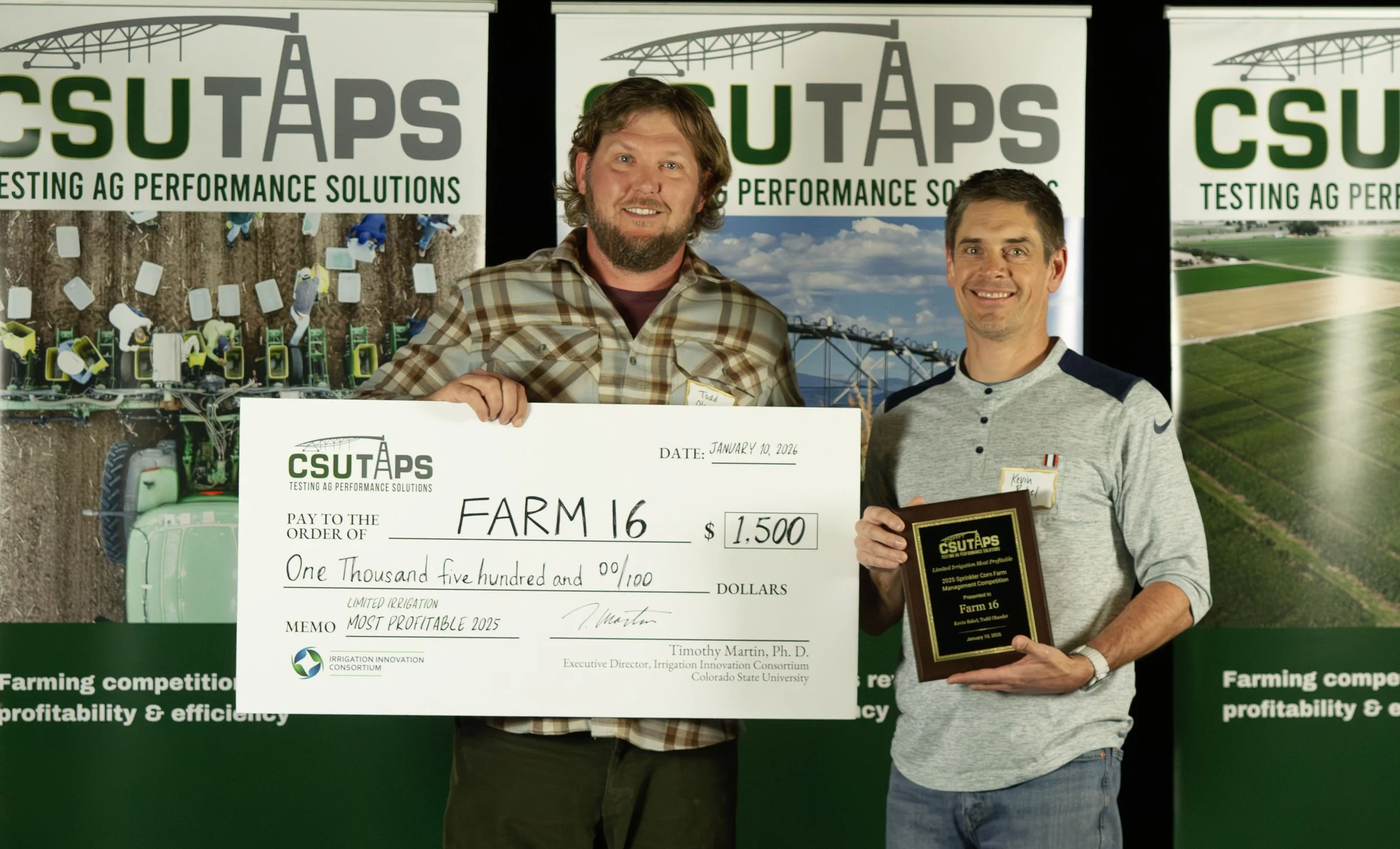
2025 CSU-TAPS Farm 16: Todd Olander and Kevin Bakel
Limited Irrigation Most Profitable
Farm 16 – Todd Olander and Kevin Bakel
Winning strategy:
Izrael: “They leased the most amount of water they could, and they marketed early and got the best price: over $5 per bushel. They also received insurance indemnities. The winning factors were a relatively high seeding rate, the third lowest production costs, very good marketing, high water [leasing] profit, and an indemnity.”
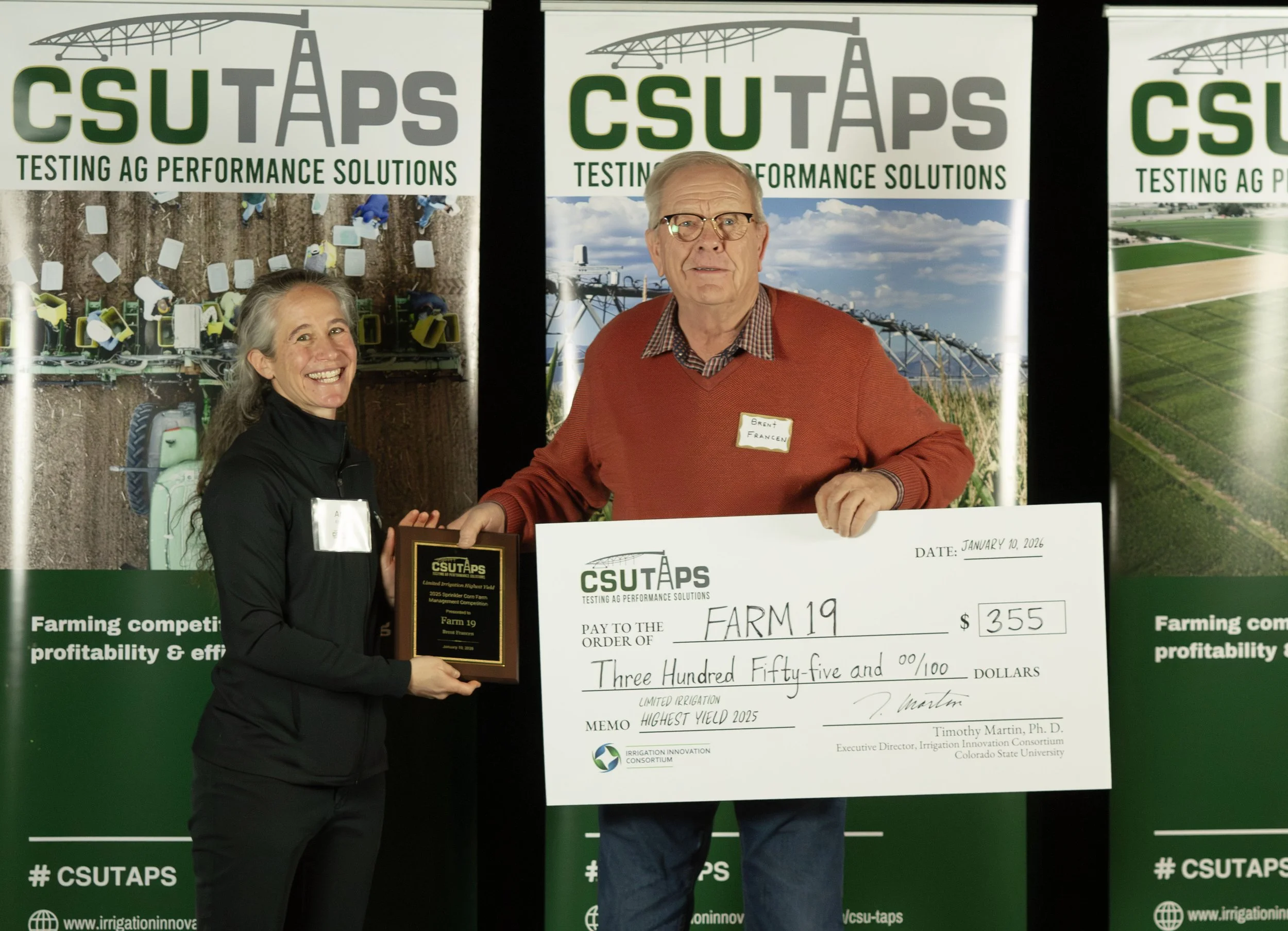
2025 CSU-TAPS Farm 19: Brent Francen
Limited Irrigation Highest Yield
Farm 19 – Brent Francen
Winning strategy:
Yilma: “He managed [his competition farm] like most of the full irrigation teams, with a high seeding rate and applying maximum irrigation and the second highest amount of N as compared to the other limited irrigation track teams. He applied his irrigation water very strategically throughout the season; the irrigation timing seemed to avoid water stress at the critical period.”
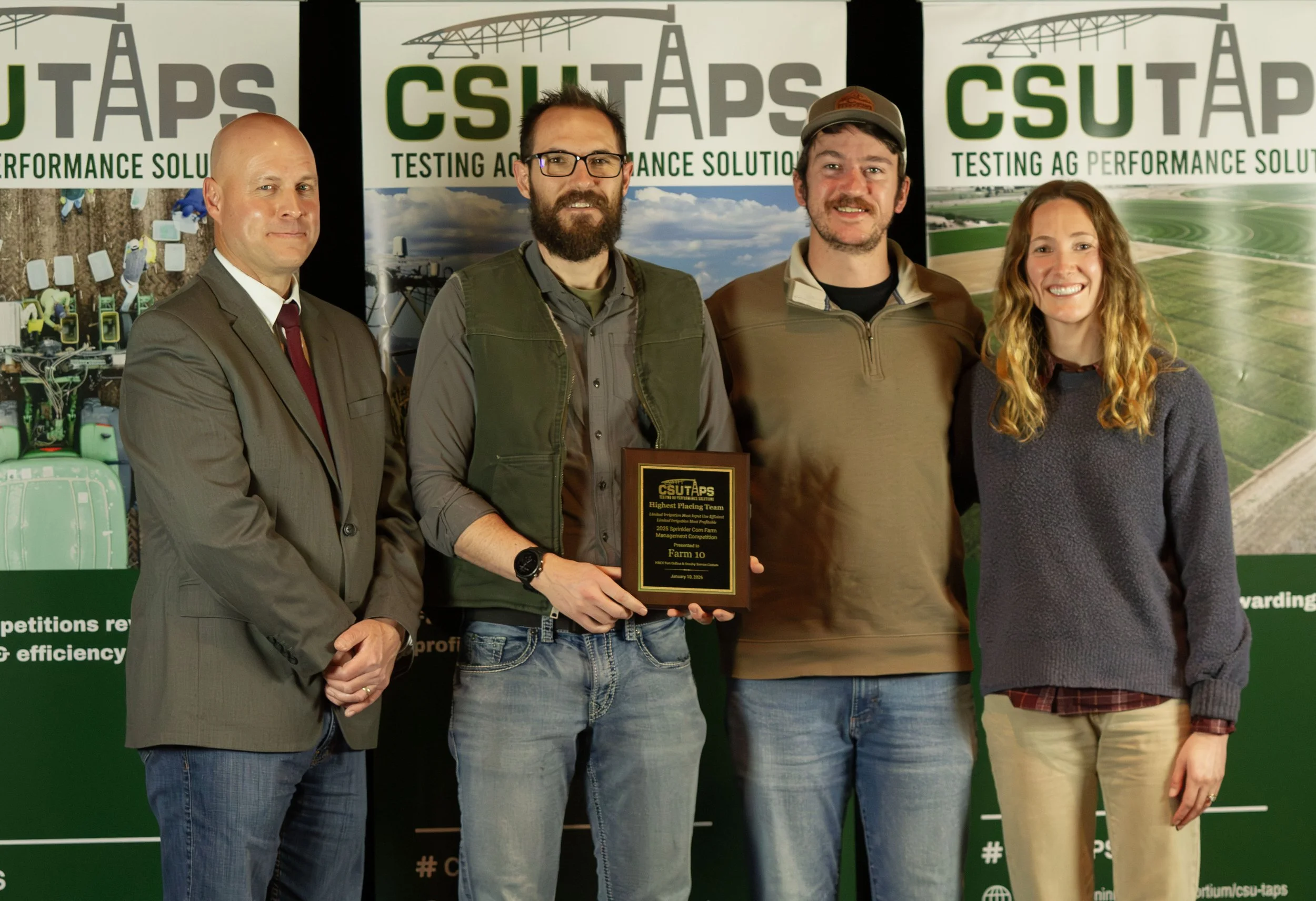
NRCS State Conservationist for Colorado Clint Evans (left) helped present a special recognition plaque to 2025 CSU-TAPS Farm 10 represented by Will Owsley, Andy Tapparo, and Amy Rozeboom.
Special Recognition
Farm 10 – NRCS Greeley & Fort Collins Service Centers Staff
Farm 10 finished highest overall in the limited irrigation track, most profitable and most input use efficient categories. As federal agency staff, this team was ineligible to receive cash awards.
Winning strategy:
Izrael: “Efficiency-wise they used only 6.5 in of water for a 28,000-seeding rate, and applied almost no N, just one fertigation on one plot. They irrigated the same amount as Farm 16, but their seeding rate was lower, which made their irrigation more efficient. Less plants per acre gave them about 10 extra bushels per acre in yield but with less water.”
Yilma: “They applied 76% of their water between July 22 and August 19, during the most sensitive crop growth period.”
Izrael: “They did quite a bit of marketing, secured a high basis price early in the season and completed the transactions later in the season, getting a relatively high revenue per bushel.
“They also had good water revenue. They had the second-lowest production costs: applied less water, applied less N, had cheap insurance, and low seed costs due to a lower seeding rate.”